Subtotal $ 0

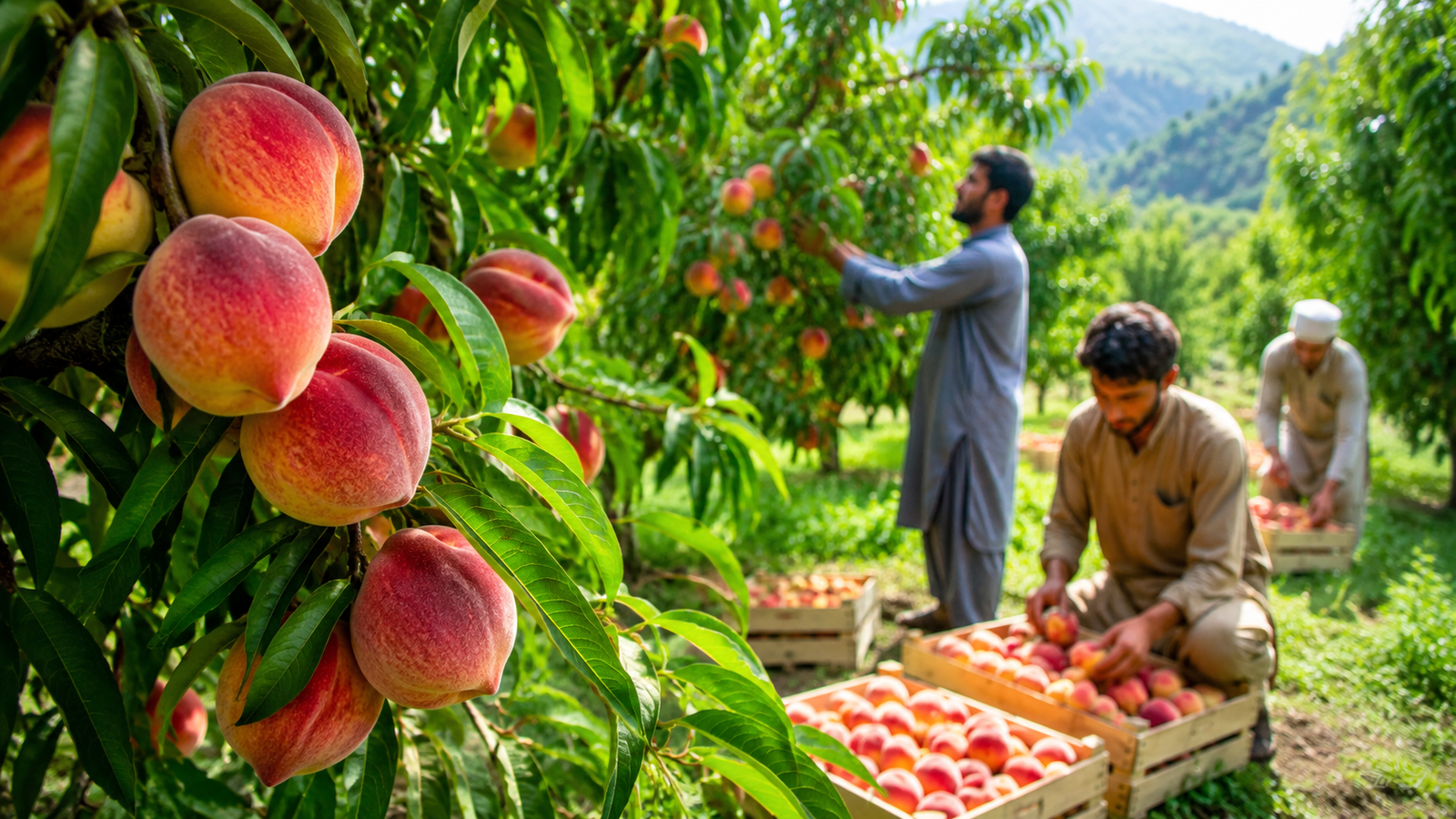
Why Peach Fruit Benefits Matter for Wholesale and Export Buyers
If you’re sourcing peaches for a store, a restaurant menu, or an export order, you already know not all peaches are created equal. Two boxes can look the same in a photo and taste completely different once they arrive one firm, sweet and worth the price the other mealy and half-bruised by the time it lands on the counter. The peach fruit benefits that make this fruit worth buying in the first place its taste shelf appeal and nutrition profile only show up when the quality is right to begin with.
We’ve spent years sourcing and exporting Swat peaches out of northern Pakistan and buyers ask us the same handful of questions every season what grade should they order how do they check freshness on arrival and what actually drives the price up or down. This guide answers all of that directly so you can order with confidence whether you’re buying a few crates for a shop or planning a full export shipment.
What Actually Makes a Peach Good Quality
Quality isn’t just about taste it’s measured against fairly specific factors that buyers and graders both look at maturity color firmness size uniformity and freedom from defects like bruising, split skin or scarring. A peach that’s mature but still firm holds up far better through transport than one picked soft and ripe even if the soft one tastes better the day it’s picked.
Size matters more for pricing than most first-time buyers expect. Larger uniformly sized peaches consistently command a higher price because they look better on a shelf and waste less in sorting. If a supplier can’t tell you the size grade or maturity stage of what they’re selling, that’s usually a sign they’re not grading consistently batch to batch.
The Peach Fruit Benefits That Make This Fruit Easy to Sell
Buyers don’t just need peaches that look good they need a fruit they can talk about, and peaches give you plenty to work with. They’re naturally low in calories, rich in vitamin C, and carry a fair amount of potassium and fiber, which makes them an easy healthy snack pitch for retail customers or a menu item that doesn’t need much justification.
That combination of genuine nutrition and broad appeal is part of why peach fruit benefits translate so directly into repeat purchases. Customers don’t need convincing that peaches are good for them they just need a peach that tastes the way they remember from the last good batch they bought.
Fresh vs Dried Peaches Which Should You Stock?
Fresh peaches sell on taste and impulse they’re a seasonal product and demand spikes hard for a few months before dropping off almost completely. Dried peaches solve the opposite problem longer shelf life no cold chain required, and steady demand year round but a smaller margin per kilogram and a more specific customer base looking for snacking or baking ingredients.
For most retail buyers, the smart move is stocking fresh peaches heavily during peak season and treating dried peaches as a smaller steady line that fills the gap the rest of the year. Export buyers further from the source often lean dried by default simply because the shelf life makes logistics far less risky.
How to Check Freshness Before You Commit to an Order
A quick smell test tells you more than color does. A ripe, good quality peach smells noticeably sweet at the stem end if there’s no smell at all it was picked too early and may never ripen properly. Gentle pressure near the stem should give slightly rock-hard fruit with zero smell is the combination to walk away from.
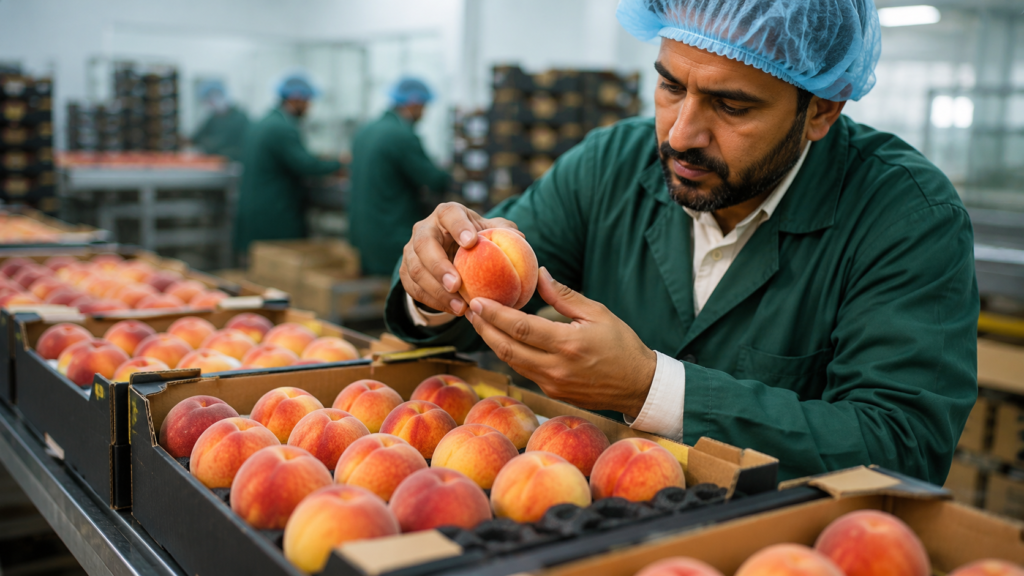
On arrival, check a sample from different parts of the shipment, not just the top layer. Bruising, soft spots, or shriveled skin scattered through the middle or bottom of a crate usually points to poor handling during transport rather than a one-off bad peach and it’s worth raising with your supplier before accepting the full order.
Packaging, Shipping and Shelf Life for Bulk Orders
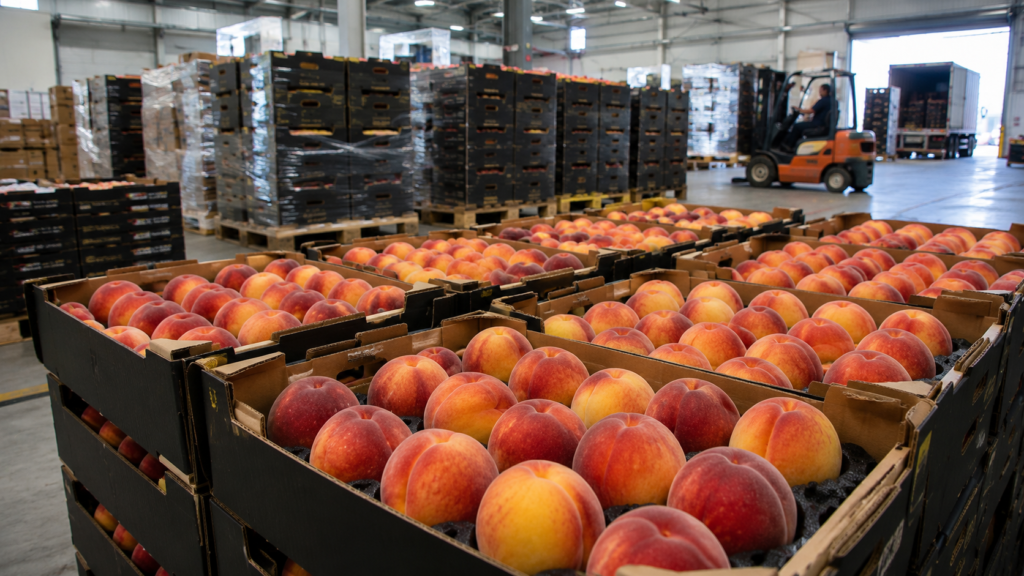
How a peach is packed matters almost as much as how it’s grown. Peaches packed too tightly bruise each other in transit, while too much empty space lets them shift and knock around. Proper single-layer or cushioned tray packing adds a small cost but cuts losses significantly on longer routes, which matters once you’re ordering by the crate or carton rather than by the kilo.
If you’re placing a bulk or export order, ask your supplier directly about cold chain handling between harvest and shipping. We pack Peach Special batches specifically for this kind of order, with grading and handling suited to longer transit times rather than same-day local sale.
What Actually Drives Peach Pricing
Grade is the biggest factor. The USDA’s official grading framework for peaches sorts fruit into categories like Fancy, No. 1 and No. 2 based on maturity, shape, and freedom from defects, and most exporters and wholesalers worldwide grade against similar standards even when they’re not using the exact same names. Top-grade fruit costs more but it also sells faster and returns less.
Season and origin play a close second. Peaches bought at peak harvest, close to the source, cost less than the same grade bought late in the season or after multiple handling points. Size, as mentioned earlier, adds another layer on top of grade within the same grade larger fruit still costs more per kilogram than smaller fruit.
Why Swat Valley Peaches Stand Out for Buyers
Swat Valley’s altitude and cooler nights during the growing season slow down ripening just enough to build more natural sugar into the fruit before harvest, which is part of why buyers who’ve worked with this region tend to come back to it specifically rather than treating peaches as interchangeable by origin. The terrain also means smaller, more carefully managed orchards rather than mass commercial farms, so grading tends to be more consistent batch to batch.
For buyers comparing suppliers, asking specifically where the peaches were grown not just “Pakistan,” but which valley or district is a fair question and a supplier who can answer it confidently is usually one who’s closer to the actual orchards rather than buying through several layers of middlemen.
How to Order Retail Wholesale and Export Options
Smaller retail buyers can typically order in lighter quantities for quicker turnover, while wholesale and export buyers will want to discuss carton sizes, grading, and shipping timelines upfront rather than after the order is placed. Either way, agreeing on grade, size, and expected freshness window before payment saves both sides a disputed shipment later.
If you’re ready to discuss a specific quantity, season, or destination, reaching out directly is faster than guessing from a price list, since peach pricing shifts with the season more than most fruit.
FAQs
What grade of peaches should I buy for retail or export?
For retail shelves, mid-to-top grade fruit with good color and firmness sells fastest. For export, top-grade, well-graded fruit is worth the extra cost since it survives transit better and reduces losses.
What’s the difference between Peach Swat and Peach Special?
Peach Swat refers to peaches sourced specifically from Swat Valley orchards, while Peach Special is graded and packed with longer transit and bulk orders in mind. Both come from the same growing region.
How long do fresh peaches last after shipping?
Properly graded and packed fresh peaches typically hold up for several days to about a week after arrival if kept cool, though this depends heavily on how ripe they were at harvest.
Are dried peaches a better option for long-distance buyers?
Often yes. Dried peaches avoid the cold chain and spoilage risk of fresh fruit, making them a lower-risk option for buyers far from the growing region.
How much do peaches cost wholesale?
Pricing depends on grade, size, season, and order quantity, so it’s worth requesting a current quote rather than relying on a fixed number, since prices shift through the season.
Can I place a bulk or export order directly?
Yes, bulk and export orders can be arranged directly, with grading, packaging, and shipping timelines discussed based on your destination and quantity.
Conclusion
Buying peaches well comes down to a handful of things that actually matter: knowing the grade you’re paying for, checking freshness properly instead of trusting a photo understanding what drives the price up or down, and choosing a supplier who can speak specifically about where the fruit comes from. Get those right, and the peach fruit benefits that make this fruit easy to sell taste shelf appeal and genuine nutrition take care of themselves.
Whether you’re filling a few crates for a local shop or planning a full export shipment, the same basics apply: grade first, freshness second, and a supplier who’s transparent about both.
As consumer demand for healthy fresh and premium quality fruits continues to grow businesses that source reliable peaches are better positioned to attract repeat customers and strengthen their reputation in the market. Choosing high-quality Peach Swat ensures better shelf appeal, longer freshness, and a product that customers genuinely enjoy purchasing. At KNK Traders International, we are committed to supplying carefully selected peaches that meet the expectations of retailers, wholesalers, and international buyers, helping businesses build long-term success with every shipment.