Subtotal $ 0

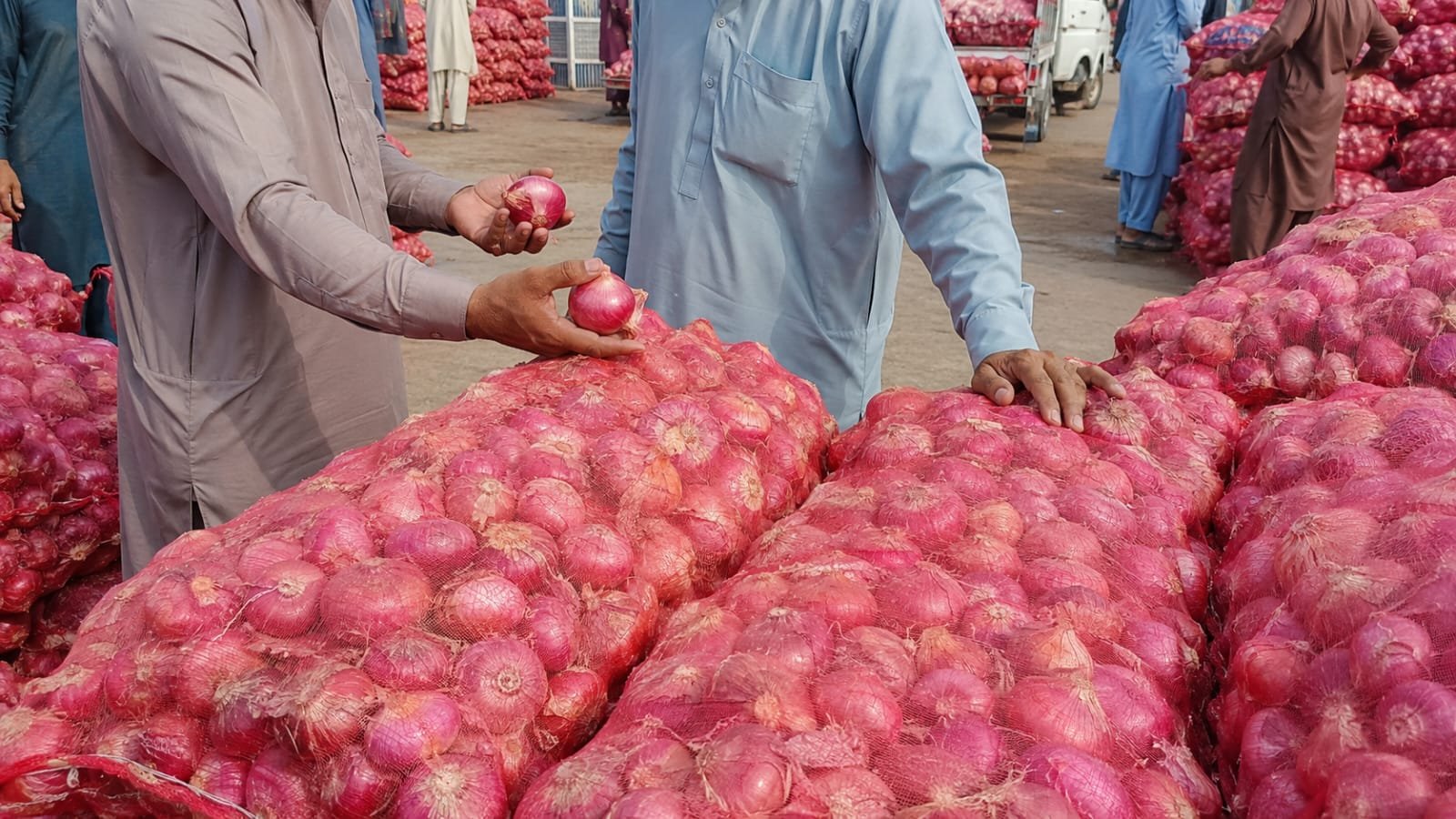
Onion Price in Pakistan Updated Market Rates Bulk Buying & Export Guide
If you’ve stepped into any sabzi mandi in the last few months you already know the drill the onion price in Pakistan can jump or drop within a matter of days. One week it’s sitting comfortably around Rs. 100 a kilo, and the next it’s pushing past Rs. 200 without much warning. For traders, restaurant owners, and home cooks alike, that kind of swing isn’t just annoying it actually affects the bottom line. If you source in bulk, you already know how much a few rupees per kilo can change your monthly costs; this is exactly why KNK Traders International’s improved high-yielding onion variety has become a go-to option for buyers who want more predictable yields and pricing.
So what’s actually happening with onion rates in Pakistan right now, and why do they bounce around so much? Let’s break it down properly city by city, season by season so you’re not left guessing at the mandi gate.
Onion Price in Pakistan Today Current Rate Snapshot
Here’s the honest answer first since I know that’s what you clicked for.
Retail onion prices in Pakistan currently sit somewhere between Rs. 100 and Rs. 220 per kilogram, depending on the city, the quality of the onion, and how close you are to a harvest cycle. Wholesale rates in the big mandis Karachi, Lahore, and Sukkur especially tend to run lower, often somewhere between Rs. 80 and Rs. 150 per kg. Premium or export-grade stock, which tends to be more uniform in size and better cured, can push past Rs. 150 and sometimes close to Rs. 250 per kg.
A few things worth flagging here these numbers move fast. Onion is one of those commodities where a single weather event heavy rain during harvest, for instance can shift prices by 30-40% within a week. If you’re buying for a business, checking your local mandi committee rate sheet on the actual morning of purchase will always beat relying on any online figure, including this one.
Why Do Onion Prices Keep Changing in Pakistan?

This is the question everyone asks, and honestly, it’s not one single reason it’s usually three or four factors stacking up at once.
Harvest timing is the big one. Onion doesn’t grow year-round at the same volume, so supply naturally dips and spikes depending on where the country sits in its growing calendar. Weather damage matters more than people expect too. A hailstorm or unseasonal rain right before harvest can wipe out a chunk of the crop, and prices react almost overnight once traders realise the expected volume won’t show up at the mandi.
Transportation and fuel costs quietly add up as well. When diesel prices rise, it costs more to move onions from Balochistan or Sindh farms to Punjab’s cities, and that extra cost naturally lands on the final price tag. Export demand is the factor people forget about most often. Pakistan regularly ships onions to Sri Lanka, the UAE, Qatar, Malaysia, and Bangladesh when that overseas demand picks up, less supply stays local, and domestic prices climb in response.
If you’re stocking onions for resale, it genuinely helps to keep an eye on the weather forecast for Sindh and Punjab during the Rabi harvest window, roughly March to May. That’s usually your best early signal for where prices are headed over the following few weeks.
City Wise Onion Rate Comparison in Pakistan
Prices aren’t uniform across the country, and the reasons why are actually pretty logical once you see the pattern. Karachi generally sees slightly lower onion rates, since its port access means direct trade routes and steadier supply chains. Lahore and other Punjab cities often pay a bit more per kilo, mainly because a large share of the stock is trucked in rather than sourced locally at scale, and that transport leg adds a small markup.
Islamabad and Rawalpindi tend to track close to Punjab’s average, occasionally running a touch higher during off-season months when supply from nearby growing regions thins out. Smaller cities and rural mandis frequently offer the cheapest rates of all, simply because they sit closer to the farm and go through fewer hands before reaching the buyer.
If you’re a business owner deciding where to source from, it’s worth comparing mandi rates across two or three nearby cities before committing to a supplier. Even a Rs. 10 per kg difference adds up fast once you’re buying at bulk volumes.
Wholesale vs. Retail Onion Prices What’s the Real Difference?

This trips people up constantly, so let’s clear it up simply. Wholesale price is what a trader pays at the mandi a bulk rate usually quoted per maund (40 kg) or per 100 kg, before it ever reaches a shop. Retail price is what you pay at your local sabzi wala or supermarket, and it already includes the shopkeeper’s margin, the transport cost from mandi to shop and normal wastage, since onions do spoil and shrink somewhat in storage.
The gap between the two is usually somewhere around Rs. 20-40 per kg, though it can widen noticeably during shortage periods when everyone in the supply chain tries to protect their own margin. For anyone buying in bulk restaurants, hostels, catering businesses going straight to a wholesale supplier or a trusted producer like KNK Traders International’s National White Onion variety usually works out far cheaper than buying retail week after week.
Onion Growing Seasons and How They Affect Price
Pakistan grows onions in two main cycles, and understanding this calendar genuinely helps you predict price movement rather than just reacting to it. The Rabi crop is planted between October and December and harvested from March to May. This is the bigger of the two harvests, and it usually brings prices down noticeably once fresh stock hits the market. The Kharif crop is planted from May to July and harvested between August and October a smaller volume, but one that helps bridge the gap before Rabi stock eventually runs low.
The riskiest window for price spikes tends to fall between June and August, right after Rabi stock starts thinning out and before Kharif harvest is fully ready to fill the gap. If you’re planning bulk purchases, buying just after Rabi harvest, around April to May, typically gets you the best rate of the year.
How to Get the Best Onion Price in Pakistan
A handful of practical habits genuinely make a difference here. Buying during the harvest months, roughly April-May and September-October, means catching supply at its peak, which is when prices are naturally at their calmest. Proper storage matters just as much keeping onions in a cool, dry, well ventilated space slows spoilage significantly and protects you from having to rebuy at inflated rates later.
Buying in bulk during those low-price windows is one of the simplest ways to beat seasonal swings, as long as you’ve got the storage space to back it up. It’s also worth comparing mandi rates across nearby cities before committing to a large order, since the difference can be bigger than expected. And where possible, building a relationship with a direct producer instead of relying purely on middlemen tends to bring more stable pricing over time, since you’re cutting out a layer of markup and guesswork.
Onion Varieties in Pakistan and Why They’re Priced Differently
Not all onions are priced the same, and quality plays a real role in what you’ll end up paying. Improved, high-yielding varieties tend to carry a slightly higher upfront cost but offer better shelf life and more consistent size, which actually reduces waste and evens out your average cost per usable kilo over time. National white onion varieties, popular for both local cooking and export markets, are another commonly traded type with their own pricing pattern based on size grading and moisture content.
If you’re a farmer or bulk buyer trying to reduce the unpredictability of seasonal price swings, working with a reliable variety supplier is genuinely one of the more underrated strategies, since better crop consistency means fewer surprises at the point of resale. For anyone comparing global onion pricing trends, sources like the wholesale export price data compiled by Selina Wamucii give a useful benchmark for how Pakistan’s rates stack up against regional markets.
Frequently Asked Questions
What is the current onion price in Pakistan?
Retail onion prices in Pakistan currently range from about Rs. 100 to Rs. 220 per kilogram, depending on city and season, while wholesale mandi rates typically run between Rs. 80 and Rs. 150 per kg.
Why is onion price so high in Pakistan right now?
Onion prices usually rise due to a combination of reduced supply after harvest season ends, higher transport and fuel costs, and increased export demand from countries like the UAE and Sri Lanka.
When is the best time to buy onions cheaply in Pakistan?
The cheapest period is typically right after the Rabi harvest, around April and May, when supply is at its highest for the year.
What’s the difference between wholesale and retail onion prices?
Wholesale price is the bulk mandi rate paid by traders, while retail price includes the shopkeeper’s margin, transport, and wastage costs, usually adding Rs. 20-40 per kg on top.
Do onion prices in Pakistan affect export businesses?
Yes. Since Pakistan exports onions to markets like Malaysia, Qatar, and Bangladesh, local prices often rise when international demand increases and more stock is diverted to export.
How can traders reduce the impact of price fluctuation?
Buying during peak harvest months, using proper cold and dry storage, and sourcing from a consistent producer instead of multiple middlemen all help smooth out the impact of seasonal swings.
Final Thoughts
Onion prices in Pakistan are never going to be perfectly predictable too many moving parts, from weather to export demand to fuel costs. But once you understand the seasonal rhythm and the wholesale-to-retail gap, you’re in a much better position to time your purchases and avoid getting caught out during a price spike.
Whether you’re a home cook trying to budget smarter or a trader looking for consistent bulk supply, keeping an eye on harvest calendars and sourcing from a reliable producer makes a real difference over the year. If you’re exploring better onion varieties for consistent yield and pricing stability it’s worth browsing what’s currently available through a trusted supplier before your next big purchase.