Subtotal $ 0

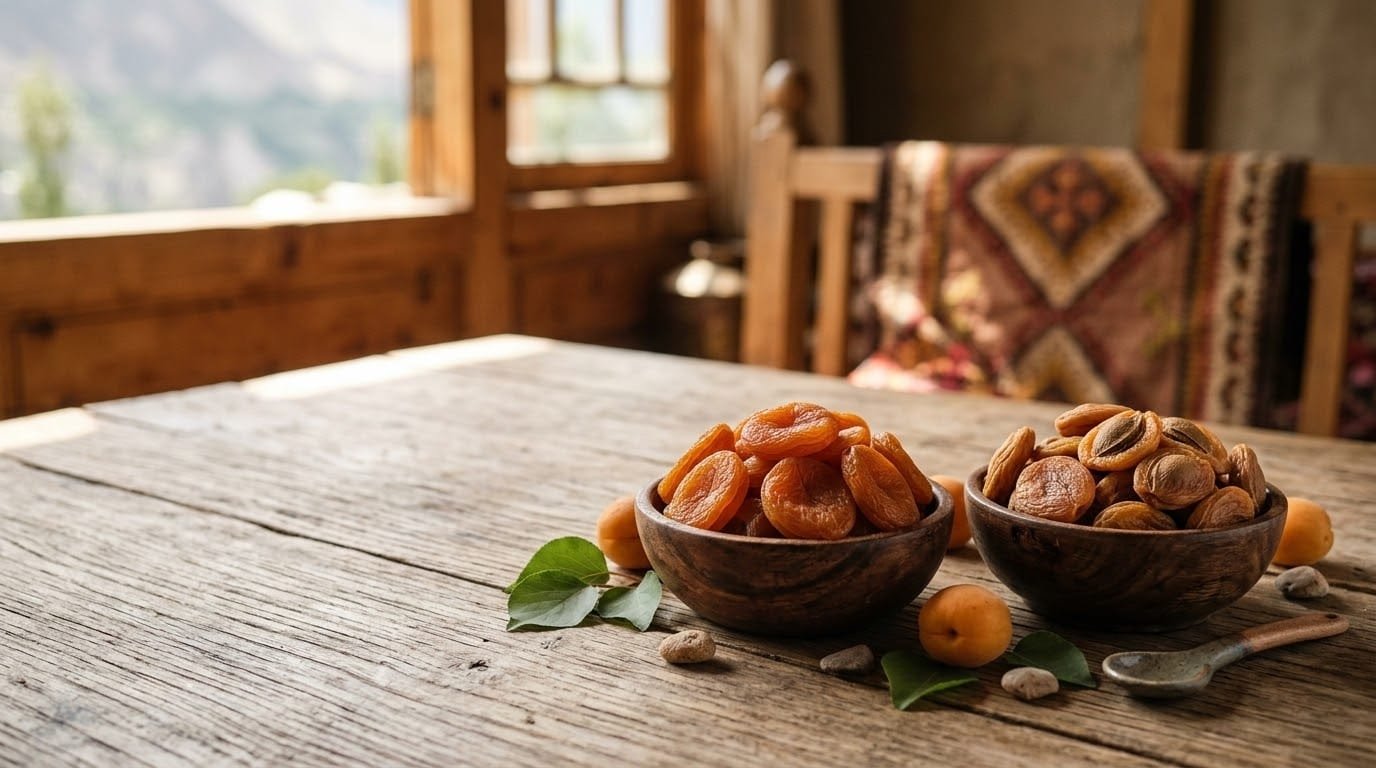
Ask anyone who grew up in Hunza or Gilgit-Baltistan about khubani and you’ll get a story before you get a definition. It’s the fruit that dries on rooftops every summer gets stuffed into jars for winter and shows up in everything from breakfast to dessert. Outside Pakistan people know it simply as dry apricot but locally khubani carries a lot more weight than just a snack.
If you’re trying to buy khubani in bulk figure out what separates a good batch from an average one or just understand why this dried fruit has become such a staple in Pakistani households and export markets alike this guide covers it properly. We’ll walk through where the best khubani comes from how it’s graded what affects pricing, and how to store it so it doesn’t go to waste. For a deeper look at the nutrition side our apricot benefits guide breaks down exactly what makes this fruit worth adding to your diet.
What Exactly Is Khubani?
Khubani is the Urdu word for apricot, and it’s used for both the fresh fruit and its dried form though in trading circles, “khubani” almost always refers to the sun-dried version. The fresh fruit has a short season, usually late May through August, so drying has always been the practical way to make it last.
The drying process itself hasn’t changed much over generations. Ripe apricots are halved, pitted, and laid out under direct sun for several days until the moisture drops low enough to prevent spoilage. Some producers still leave the kernel inside for a slightly bitter, almond-like edge a style many buyers specifically ask for.
Fresh vs Dried Why It Matters for Buyers
Fresh apricots don’t travel well. They bruise easily and spoil within days, which limits them to local and regional markets during a narrow window. Dried khubani solves that problem entirely it can sit in proper storage for months, ship internationally without special refrigeration, and still deliver most of the fruit’s original flavor and nutrition.
That’s really the whole reason khubani exists as a trade commodity in the first place. It turns a seasonal, perishable fruit into a year-round product.
Where Pakistan’s Best Khubani Comes From
Not all khubani is equal, and location plays a bigger role than most people realize. The apricots grown in Gilgit-Baltistan, Hunza Chitral and parts of Balochistan benefit from high altitude, cold winters, and mineral-rich soil conditions that produce a naturally sweeter denser fruit compared to apricots grown at lower elevations.
Hunza in particular has built something of a reputation, partly because of the region’s association with longevity diets, and partly because the fruit genuinely tastes different. Farmers there have been drying apricots the same way for generations, using open-air rooftop drying rather than mechanical dehydrators, which many buyers believe preserves more of the natural flavor.
If you’re sourcing for export or wholesale, asking which region a batch came from tells you almost as much as inspecting the fruit itself.
Types and Grades of Dry Apricot
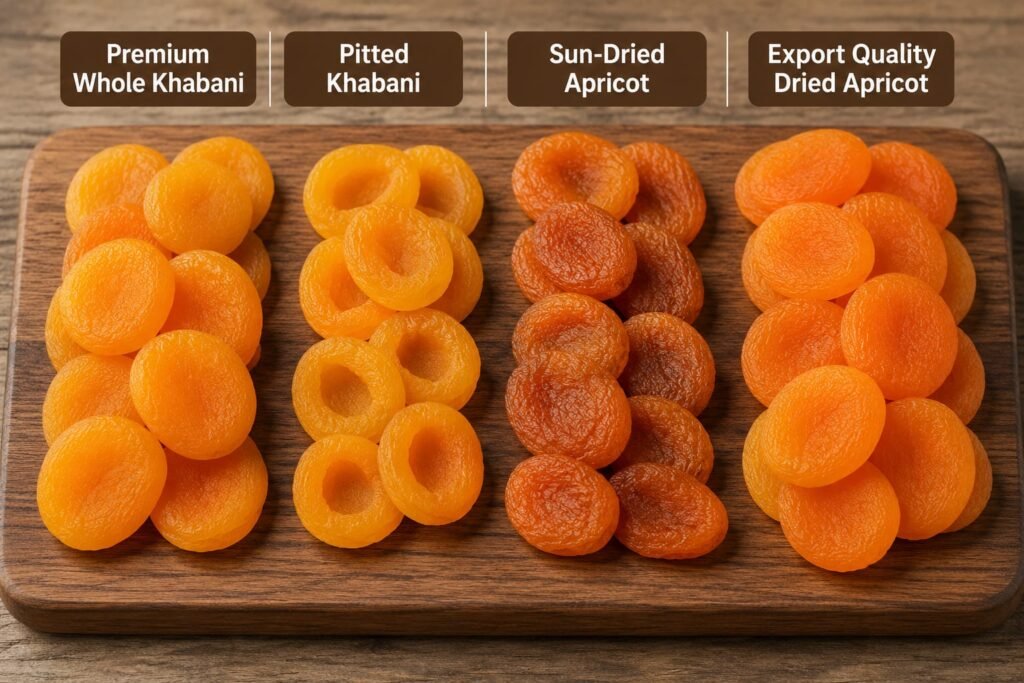
Once khubani reaches the market, it’s typically sorted into a few recognizable categories. Understanding these helps you know what you’re actually paying for.
By kernel:
- Khubani with kernel (khati khubani style) kernel left intact, giving a slightly tart, almond-tinged bite
- Pitted khubani kernel removed, softer and more uniformly sweet
By processing:
- Sun-dried, no additives the traditional method, slightly darker in color
- Sulfur-treated brighter orange color, longer shelf life, common in commercial export batches
By size and appearance
Whole halves that are plump and evenly colored generally command a higher price
Smaller, irregular pieces are usually sold at a discount for use in baking or processing
Neither method is inherently better it comes down to what the buyer needs. A home cook chasing authentic flavor often prefers the traditional sun-dried batches, while bulk commercial buyers sometimes lean toward the treated version for consistency and appearance.
Why Khubani Has Earned Its Reputation
There’s a reason khubani shows up in traditional diets across Gilgit-Baltistan far more than most other dried fruits. For a full nutritional breakdown, our guide on dried apricot benefits covers the specifics but a few points are worth mentioning here.
Dried apricots concentrate the fiber and nutrients of the fresh fruit into a smaller, more convenient package. That’s part of why they’ve historically been used as a practical energy source for travelers and farmers working long hours in the mountains not as a trend, but as something that simply worked.
They’re also naturally sweet without any added sugar, which is one reason they’ve held up so well as families move toward less processed snacking options.
How to Judge Quality Before You Buy
If you’re buying khubani for the first time especially in bulk a few quick checks go a long way.
Look at the color Good quality khubani should have a warm, natural orange-brown tone. Overly bright orange can sometimes signal heavy sulfur treatment, while dull gray-brown pieces may indicate poor drying or storage.
Check the texture It should be pliable, not rock-hard or overly sticky. Rock-hard pieces usually mean the fruit was over-dried or is simply old stock.
Smell it Fresh khubani has a mild, sweet, slightly tangy aroma. Anything musty or sour is a red flag for moisture damage.
Ask about the harvest season Khubani from the most recent season will always outperform older stock in flavor and texture, even if it looks similar on the shelf.
Khubani Prices in Pakistan What Affects the Rate
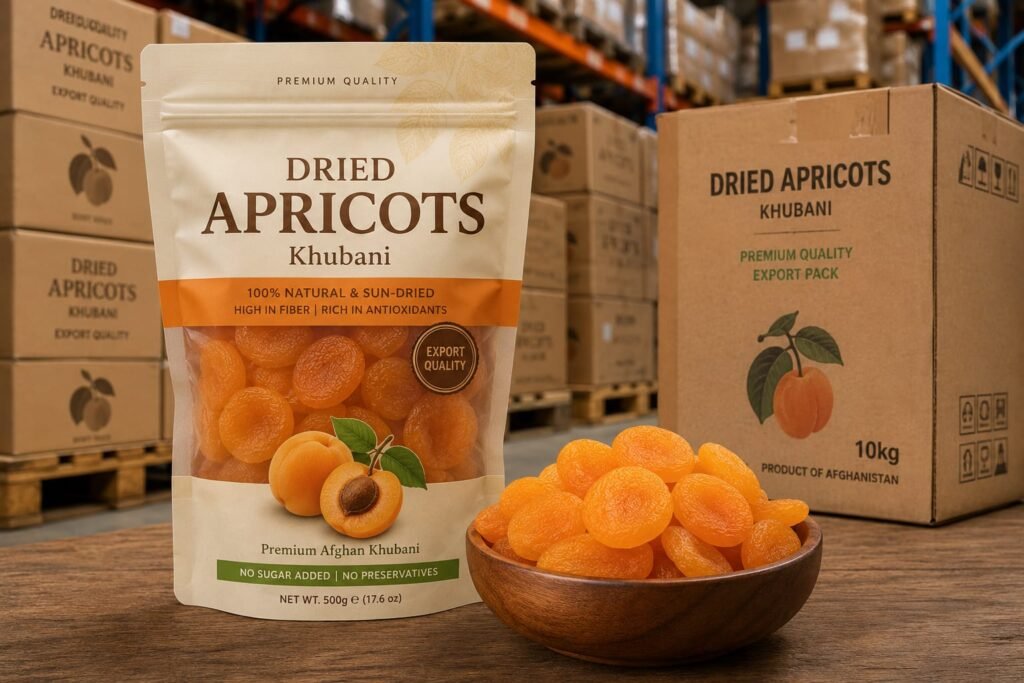
Pricing for dry apricot in Pakistan moves with a handful of predictable factors. The harvest season itself matters prices are usually more favorable right after harvest and tend to climb as stock gets scarcer later in the year.
Grade and region are the two biggest price drivers. Premium Hunza and Gilgit-Baltistan khubani, especially the kernel-in variety, typically sells at a noticeable premium over lower-altitude produce. Whole, unbroken halves also cost more than mixed or broken pieces, simply because of the extra sorting labor involved.
Buyers looking for exact current rates should always confirm directly with suppliers, since dry fruit pricing shifts with currency rates, export demand, and seasonal supply figures posted online can go stale within weeks.
How to Store Khubani So It Lasts
Poor storage is the single biggest reason people end up throwing out perfectly good khubani. A few habits make a real difference.
Keep it in an airtight container rather than a loosely tied bag exposure to air is what dries it out further or invites moisture, depending on your climate. A cool, dark cupboard works fine for short-term use, but if you’re in a humid area or storing a larger quantity, the refrigerator extends shelf life significantly.
Avoid storing khubani anywhere near strong-smelling spices. Dried fruit absorbs odors easily, and it’s not uncommon for a batch to pick up an unwanted masala smell after a few weeks in the wrong cupboard.
Properly stored, good quality khubani can comfortably last 6 to 12 months without losing much of its flavor or texture.
Frequently Asked Questions
Is khubani the same as apricot?
Yes. Khubani is simply the Urdu name for apricot, and it’s commonly used to refer to the dried version of the fruit in Pakistan.
Which region produces the best khubani in Pakistan?
Gilgit-Baltistan, Hunza, and Chitral are widely regarded as producing the highest quality khubani, thanks to high-altitude growing conditions.
Should I buy khubani with or without the kernel?
It depends on personal preference. Kernel-in khubani has a slightly tart, almond-like flavor, while pitted khubani is softer and more uniformly sweet.
How can I tell if khubani has gone bad?
Look for a sour or musty smell, visible mold spots, or an unusually sticky, wet texture all signs it’s time to discard it.
Is sulfur-treated khubani safe to eat?
Sulfur dioxide is a commonly used, regulated preservative in the dried fruit trade. Buyers who prefer to avoid it can specifically ask suppliers for untreated, sun-dried batches.
How long does dried khubani stay fresh?
Stored properly in an airtight container, khubani typically stays good for 6 to 12 months.
Can khubani be exported internationally?
Yes, khubani is a well-established export product from Pakistan, with buyers across the Middle East, Europe, and beyond sourcing it in bulk for retail and food processing.
Final Thoughts
Khubani isn’t just another dried fruit on the shelf it’s a product with real regional identity, shaped by altitude, tradition, and a drying process that’s barely changed in decades. Whether you’re buying a small pack for home or sourcing in bulk for export, knowing what separates a good batch from an average one puts you in a much stronger position as a buyer.
If you’re looking to source quality khubani directly from Pakistan’s growing regions, reach out to our team for current stock, grading options, and export details we’re happy to walk you through what fits your needs.