Subtotal $ 0

If you’ve ever wondered why some potato chips come out a perfect golden color while others turn dark and bitter at the edges the answer usually traces back to the potato itself not the fryer. That’s exactly why processors searching for a Lady Rosetta chips potato supplier end up looking at Pakistan first.
We’ve spent years sourcing and grading this variety out of Punjab’s potato belt and it’s become one of our most requested products for chip and crisp manufacturers. Our Lady Rosetta potato listing gets inquiries from buyers who’ve already tried other origins and want something more consistent. So let’s get into what actually makes this potato worth your attention what specs to ask for, and how the export process works from our side.
What Is Lady Rosetta Chips Potato Exactly?
Lady Rosetta was bred in the Netherlands specifically for the snack food industry, not for boiling or mashing. It’s a cross involving the Cardinal variety developed to give processors a tuber that behaves predictably on an industrial line.
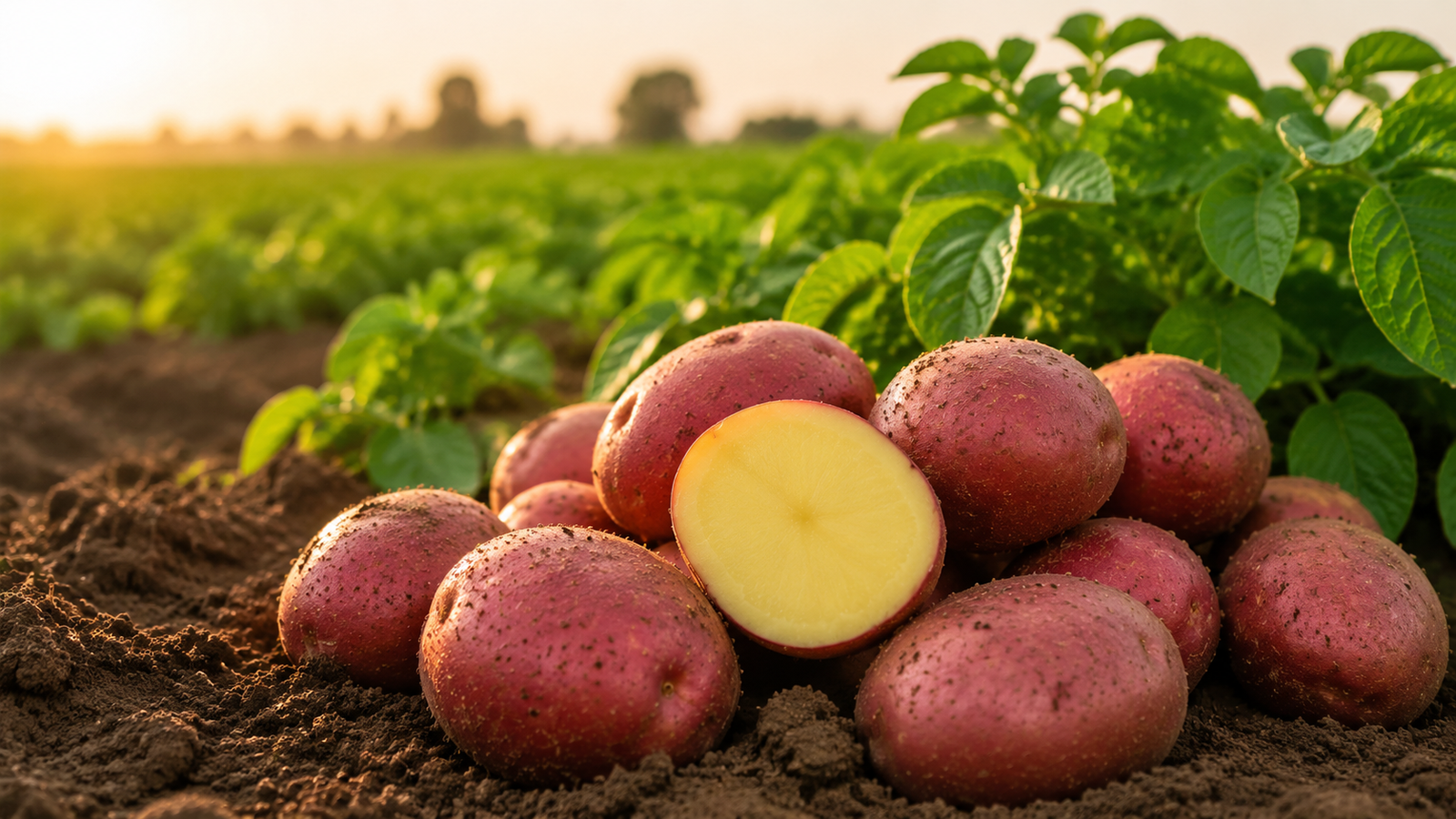
The potato itself is round, with red skin and pale yellow to white flesh underneath. The eyes sit shallow, which matters more than people think since deep eyes mean more peeling waste and more labor at the processing stage.
What really sets it apart is the internal chemistry. Lady Rosetta carries a naturally high dry matter content usually somewhere in the 20-22% range, paired with low reducing sugars. That combination is the entire reason chip makers love it.
Why It’s Different From a Table Potato
A potato grown for boiling or mashing is built for water content and a soft bite. Lady Rosetta is the opposite. It’s bred to lose less moisture in the fryer and hold its shape under heat which is a completely different job description.
Why Chip Makers Keep Coming Back to This Variety
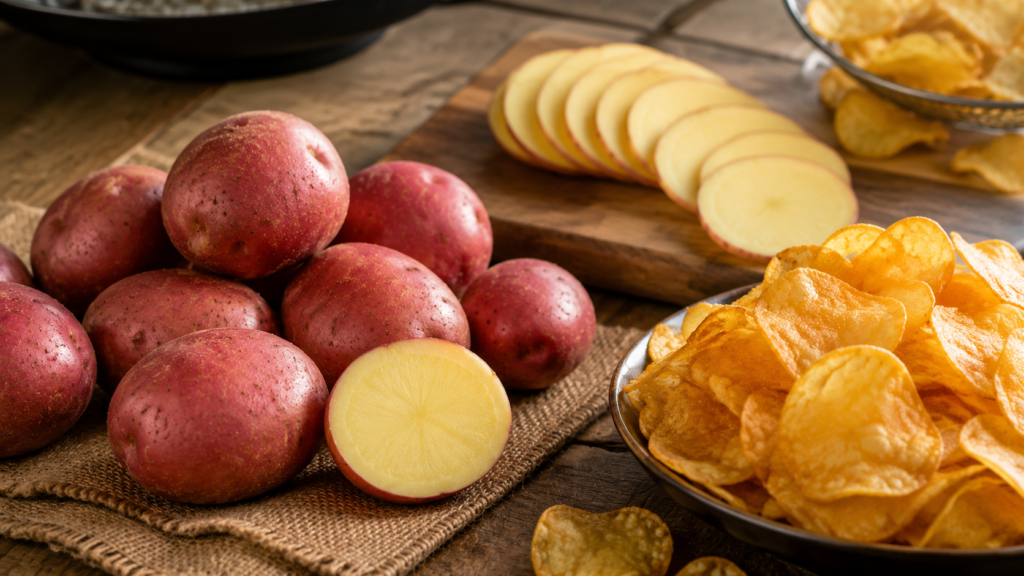
Here’s the direct answer, since this is probably what brought you here: Lady Rosetta fries to a light, even golden color and holds less oil than most table potato varieties, thanks to its low sugar and high starch profile.
The low reducing sugar content is the key piece. Sugars react with heat during frying, which is what causes chips to darken or taste slightly bitter at the edges. Lady Rosetta just doesn’t carry much sugar to begin with, so the fry color stays light without any artificial help.
High dry matter does double duty too. It means less water inside the tuber, which means less oil soaks in during frying, and the texture comes out crisp instead of greasy. Processors running high volume lines notice this in their oil costs over time, not just in how the chips taste on day one.
There’s also the shape to think about. Round, uniform tubers slice more evenly on mechanical cutters, so you get fewer broken or irregular chips per batch, which matters when you’re paying for finished product weight.
Lady Rosetta vs Sante Which One Do You Actually Need?
We get this question a lot, mostly because both varieties grow well in the same Punjab fields and both show up on most potato exporter lists.
Lady Rosetta is built for chips. Sante is built for everything else.
Our Sante potato line is round too, but it resists eelworm better and holds up longer in storage, which makes it a better fit for baking, boiling and general pre-pack retail rather than industrial frying. If your buyer wants a potato that sits on a supermarket shelf for weeks without losing quality, Sante usually wins that conversation.
If your end product is chips, crisps, or savory snacks, stick with Lady Rosetta. Mixing the two into one order just because “they’re both potatoes” is a mistake we’ve seen cost processors money once the batch hits the fryer.
What to Check Before You Place an Order
Buyers usually ask for the same handful of details, so here’s what actually matters when you’re vetting a shipment.
Size matters more than people expect. We grade tubers by caliber, and most chip processors ask for something in the 45mm to 70mm range, since anything smaller slices awkwardly and anything larger slows down the line.
Maturity matters just as much as size. A fully matured Lady Rosetta holds its dry matter and sugar profile far better than one harvested early just to meet a shipping deadline. We don’t rush harvest to hit a date, since a rushed batch usually means complaints later down the supply chain.
If you want to dig into the variety’s breeding background and official characteristics, Meijer Potato, the Dutch breeder behind Lady Rosetta, keeps a solid reference page worth a read.
Packaging and How We Get It to Your Port
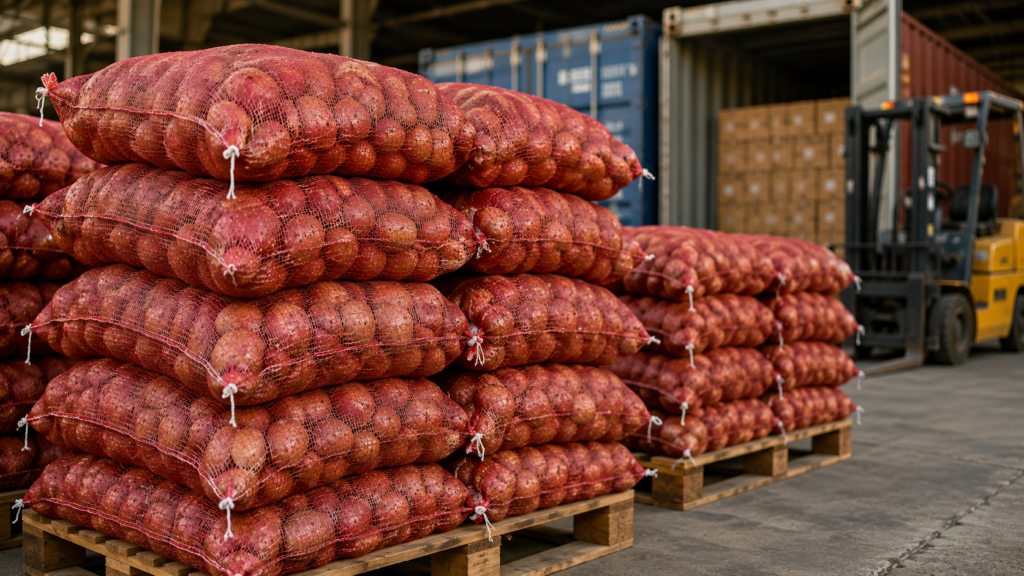
Most of our Lady Rosetta orders go out in mesh or jute bags, packed at 5kg, 7kg, or 10kg depending on what the buyer’s market expects. Smaller bags move well in Gulf retail and wholesale channels, while larger industrial buyers sometimes ask for custom weights instead.
We pack from our facility near Depalpur in Okara, Punjab, and load straight onto trucks heading to Karachi port for sea freight. Documentation, phytosanitary certificates, and customs paperwork get handled on our end, so buyers aren’t stuck chasing approvals after the container’s already loaded.
Where This Potato Travels From Here
Pakistani Lady Rosetta has found a steady home in Gulf markets like the UAE, Saudi Arabia, Oman, and Qatar, along with growing demand from Central Asian buyers. It’s worth noting the variety isn’t exclusive to Pakistan either; India’s Punjab and Bihar regions grow it too, which says something about how well it suits South Asian growing conditions in general.
For processors comparing origins, Pakistani-grown Lady Rosetta tends to come in at a more competitive price point than European stock, without giving up much on quality.
Why Buyers Work With KNK Traders International
We’re based in Depalpur, Okara, right in the middle of Punjab’s potato-growing belt, which means shorter time between harvest and packing. That matters for a crop where sugar levels start shifting the moment it’s pulled from the ground.
We don’t outsource grading to a third party. Every batch gets sorted and checked by our own team before it’s bagged, so what you see in the sample is what shows up in the container.
We also keep things simple on communication. You can reach our team directly for quotes, sample requests, or just to ask questions before committing to a bulk order.
Frequently Asked Questions
Is Lady Rosetta chips potato good for making potato chips?
It works for both, honestly. Home cooks like it because the low sugar content means chips don’t turn dark in a regular kitchen fryer either. Factories just buy it on a much bigger scale.
What’s the difference between Lady Rosetta and a regular potato for frying?
Regular table potatoes usually carry more sugar and less dry matter, so they brown faster and soak up more oil. Lady Rosetta was specifically bred to avoid both problems.
How long do Lady Rosetta potatoes stay fresh after harvest?
Stored properly in cool, ventilated conditions, they hold their quality for several months. We don’t recommend pushing storage much past that window if fry color is your priority.
Can I get a sample before placing a bulk order?
Yes, we send sample quantities so processors can test fry color and texture on their own equipment before committing to a full container.
What size potatoes do you supply for chip processing?
Most orders fall in the 45mm to 70mm caliber range, though we can adjust grading based on what your slicing equipment needs.
Do you export Lady Rosetta potatoes to India?
We currently focus on Gulf and Central Asian markets, but we’re open to discussing new destinations if the order volume makes sense logistically.
What packaging options are available for bulk export?
Standard packing is mesh or jute bags at 5kg, 7kg, or 10kg, though we can work out custom weights for larger industrial buyers.
Conclusion
Lady Rosetta earned its reputation in the chip industry the practical way: by consistently frying lighter, crisper, and cheaper to process than most alternatives. Pakistan’s Punjab region grows it well, and sourcing it from origin means shorter supply chains and fresher harvest-to-export timing than buying through a middleman.
If you’re sourcing for a snack production line, get a sample batch first and judge it on your own equipment before scaling up. That’s really the only way to know if a variety fits your process. Reach out to our team whenever you’re ready to talk specs, pricing, or shipping timelines.