Subtotal $ 0

Pink Salt Price in Pakistan Real Rates, Grades & Buying Guide 2026
Walk into any grocery store in Pakistan and you’ll find three bags of “Himalayan pink salt” sitting side by side one at Rs. 100, one at Rs. 380, and a glass grinder touching Rs. 1,100. All claiming to be the same product.
So what’s the real pink salt price in Pakistan in 2026, and why is the gap this wide?
The price difference is real, and it matters. Pakistan is the world’s only natural source of Himalayan pink salt — yet most buyers either overpay or get low-grade product without knowing it. This guide gives you everything you need before you buy.
Pakistan’s Edge The Only Place This Salt Exists
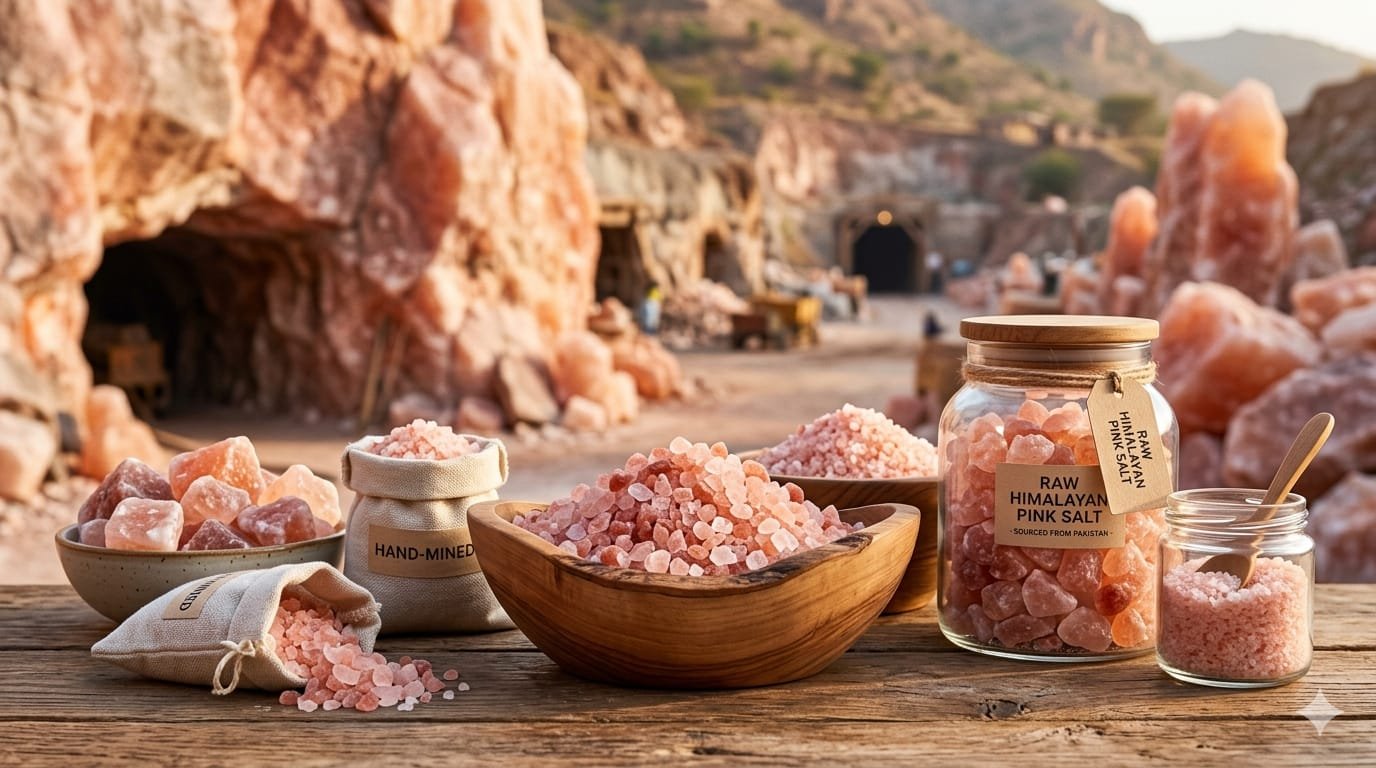
Every bag of genuine Himalayan pink salt on the planet traces back to one location: the Khewra Salt Mine in Punjab’s Salt Range, roughly 160 km from Islamabad. It’s the second-largest salt mine in the world and has been running for over 2,000 years.
That pink colour isn’t marketing. It comes from iron oxide and trace minerals embedded in ancient rock over hundreds of millions of years. Authentic Khewra salt carries over 84 trace minerals calcium, potassium, magnesium, and others which refined white table salt simply doesn’t have.
Pakistan exports around 400,000 tonnes of this salt every year. Most of it leaves as raw unprocessed rock, gets repackaged abroad, and ends up on European and American shelves at $6–15 per kg. The same Pakistani salt. That gap between source cost and international retail price is exactly why global demand keeps climbing in 2026 and why buyers in Pakistan have an advantage most people don’t fully use.
Pink Salt Price in Pakistan 2026 Full Rate Breakdown
Prices shift based on form, grade, and quantity. Here’s what the market looks like right now.
Retail Prices
Fine-ground pink salt everyday cooking variety currently runs Rs. 100–220 for a 500g pouch and Rs. 180–400 for 1 kg. Budget brands sit at the lower end; names like Himalayan Chef and Dasht push higher.
Coarse-grain salt for grinders, BBQ rubs, and bath soaks costs Rs. 220–450 per kg in standard packs. Glass grinder jars (180g–368g) range from Rs. 420 to Rs. 1,100 — you’re paying for the jar and the grinder mechanism, not a better product inside.
Branded gift sets from companies like ChiltanPure sell around Rs. 1,100–1,400 for a set of three pouches. Worth it if you need bulk household supply, otherwise it’s a brand premium you can avoid.
Wholesale and Bulk Prices
For restaurants, retailers, and exporters, the numbers look completely different. At 25 kg bag volumes sourced from Punjab-based suppliers, pink salt currently runs roughly Rs. 50–170 per kg depending on grade. Export-grade bulk orders at 500 kg minimum order quantities still go as low as $0.15–0.20 per kg — under Rs. 55 per kg — when purchased directly from mine-level suppliers.
That same product retails internationally at $4–12 per kg. Every rupee of difference is processing, branding, and logistics markup — not the salt itself. For anyone active in Pakistan’s agro-food export sector, this spread is one of the most compelling margin opportunities in the specialty food market.
The Grade System This Is What Actually Determines Price
Most buyers focus on brand name or packaging. Grade is what actually moves the price — and most buying guides never explain it properly.
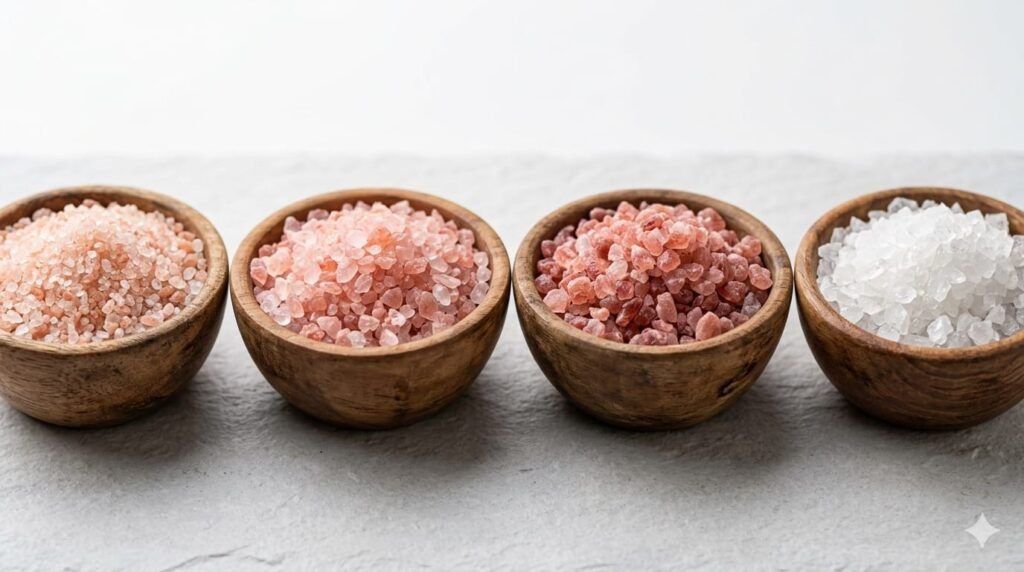
Grade 1 Light Pink (Standard) Pale to medium colour, widely available, fills most retail pouches in the market. Completely authentic Khewra salt, clean and additive-free. Good for daily cooking. The most affordable grade.
Grade 2 Medium Pink (Premium) Deeper colour, richer mineral profile. Mid-tier brands use this grade. A modest price step above standard.
Grade 3 Dark Pink / Rose (Select) Deep rose colour from higher iron content. Preferred by gourmet chefs. More expensive due to lower mine yield.
Grade 4 Dark Red / Kalabagh Salt From the Kalabagh district, not Khewra. Very limited supply, highest mineral concentration. The rarest and most expensive grade domestically.
White Crystal Salt Nearly transparent crystals of exceptional purity. Not pink but from Pakistan’s salt range. Priced above standard pink due to rarity.
If a seller is offering you “premium Himalayan salt” in a pale pouch at the lowest shelf price — that combination doesn’t add up. Grade and colour should match.
Ways to Spot Fake Pink Salt Before You Buy
A real portion of what’s sold as Himalayan pink salt in Pakistan is either artificially dyed white salt or low-grade rock salt labelled as premium. These five checks take under a minute.
Colour consistency: Genuine pink salt has natural variation across crystals — slightly lighter here, slightly darker there. Perfectly uniform, vivid pink is almost always food colouring.
GI certification: Himalayan Pink Salt is a registered Geographical Indication (GI) product of Pakistan. Certified products state this explicitly and mention Khewra mine origin.Buyers can verify the official Geographical Indication (GI) registration status through the Intellectual Property Organization of Pakistan (IPO Pakistan).
Origin labelling: Should clearly state “Khewra Salt Mine, Punjab, Pakistan.” Vague labels saying only Himalayan region with no Pakistan mention are a red flag.
Taste test: Real pink salt has a mild, slightly mineral quality — subtly different from the sharp flatness of cheap iodised table salt. If they taste identical, something’s wrong.
Price logic: Branded packaging below Rs. 70 per kg should raise questions packaging alone costs more than that to produce.
What Pink Salt Is Actually Used For in 2026
Everyday cooking is the obvious use, but the real case for pink salt is what isn’t in it no anti caking chemicals, no bleaching agents, no synthetic additives. For households wanting a clean, minimally processed salt, that distinction matters.
Bath and skin care is where coarse pink salt earns its price premium. Dissolved in warm water, the magnesium content eases muscle soreness and softens skin. Worth keeping a separate coarse-grade supply at home.
Halotherapy (salt room therapy) has grown significantly across Pakistan. Wellness centres in Islamabad, Lahore, and Karachi now run dedicated salt rooms built from Khewra blocks, used for asthma and respiratory conditions.
Export and value-added products are where the real business case sits. Salt lamps, cooking slabs, and retail-packaged specialty grades are among Pakistan’s strongest-growing non-textile exports. Anyone expanding their export product range from Pakistan will find processed pink salt delivers margins that raw bulk can’t match.
Where to Buy Authentic Pink Salt in Pakistan
Online: Daraz.pk offers the widest selection with easy price comparison. WBM Mart Pakistan stocks Himalayan Chef reliably. ChiltanPure and Baqa Foods deliver nationwide.
Retail: Al-Fatah stores carry clearly labelled multiple grades. Imtiaz Super Market and Metro Cash & Carry are good for standard to bulk retail purchases.
Wholesale: Pakmines International, Royal Salt, and PQ Chemicals are established bulk suppliers. MOQs start at 500 kg. Always request a quality certificate and origin documentation before committing.
FAQs
What is the pink salt price in Pakistan per kg in 2026?
Retail pink salt costs Rs. 180–400 per kg depending on brand and grade. Budget options start around Rs. 100 per kg. Wholesale prices fall to Rs. 50–170 per kg for bulk 25 kg bags.
Is all Himalayan pink salt from Pakistan?
Yes there is no other natural source. Every authentic product comes from the Khewra Salt Mine in Punjab. Look for Khewra origin labelling and GI certification.
What is the wholesale pink salt price per kg?
For 25 kg bags, Rs. 50–170 per kg depending on grade. Export-volume orders (500 kg MOQ) go as low as $0.15–0.20 per kg direct from mine-level suppliers.
Why does the price vary so much?
Grade, colour, grain size, and packaging all drive price. Darker grades cost more due to limited mine yield. A glass grinder jar adds Rs. 300–400 to cost without improving the salt.
Can I switch completely from table salt to pink salt?
Yes fine-ground pink salt substitutes directly in all cooking. Keep in mind it’s naturally low in iodine, so if you stop using iodised salt entirely, get iodine from dairy, eggs, or seafood.
How do I know if pink salt is genuine?
Check for natural colour variation, Khewra mine origin labelling, GI certification, and a mild mineral taste. Branded packaging below Rs. 70 per kg is worth questioning.
Conclusion
Pakistan’s pink salt price remains one of the best-value propositions in the global specialty food market you’re buying at source, without the international brand and logistics markup built in.
Three things to remember: grade matters more than brand, packaging cost is separate from salt quality, and certified Khewra origin is non-negotiable. Whether you’re stocking a kitchen or sourcing for a business, the rates here give you a current 2026 baseline.
For businesses looking to source authentic Pakistani food and mineral products at competitive prices, KNK Traders International operates directly across Pakistan’s key agro-food export categories reach out to discuss sourcing requirements.